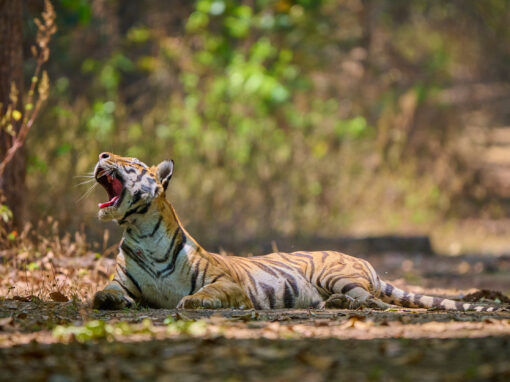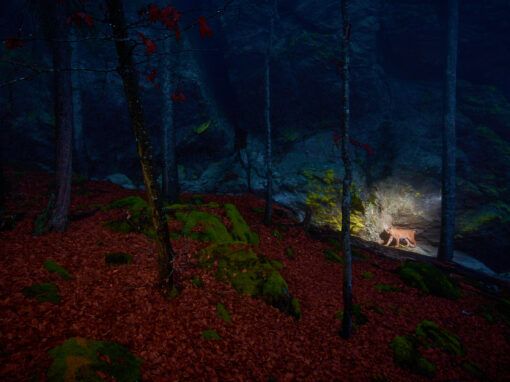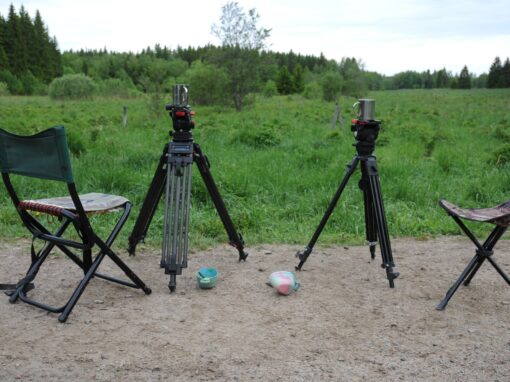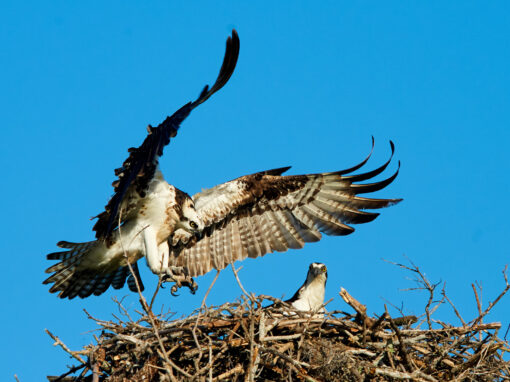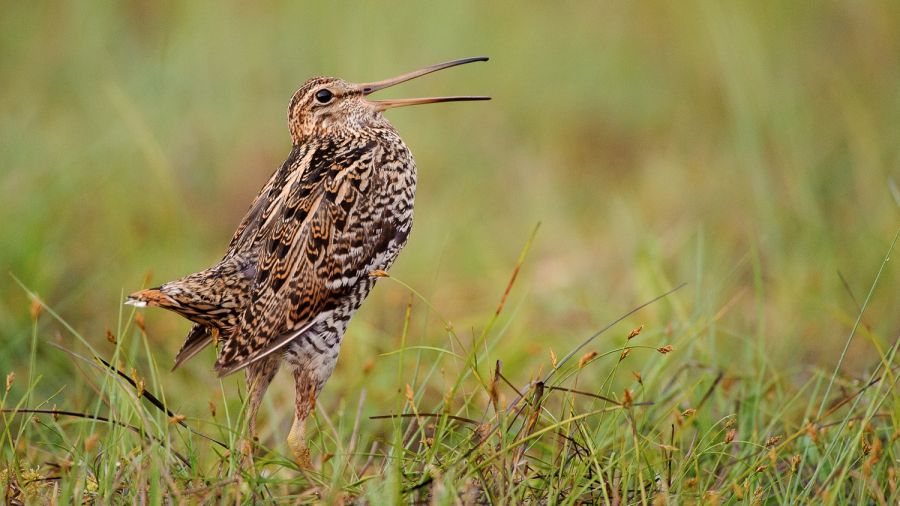

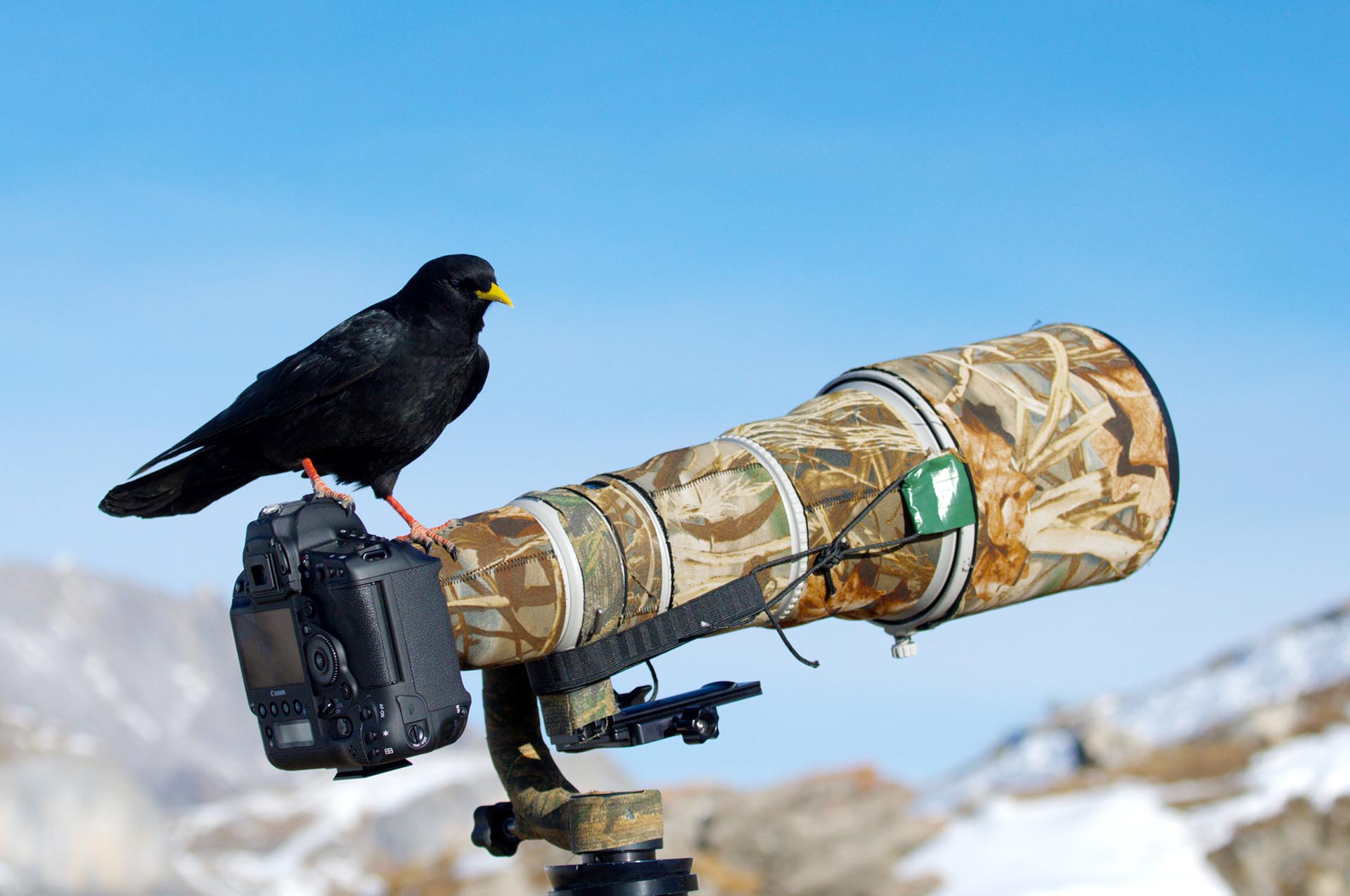

When I head to the Bavarian Forest, I usually have the same lens on my camera: a 500 mm f/4, now via the FTZ adapter on the Z8. Next to it is the Z 180–600, and which of the two comes along is always the same trade-off between light intensity and weight.
That's exactly what this is about: which focal length for which animal, when a fixed focal length is worth it over a telephoto zoom and what a teleconverter costs in terms of light and sharpness in everyday use.
I've been shooting with the Nikon system ever since I started taking photos. Why? Because I'm used to it - no more and no less. That's why Nikon models are featured here; I can't say anything about Canon and Sony. But the considerations behind them apply to any system.
If you're still further back and first want to know which lens classes exist in nature photography at all, you'll find that in the lens selection overview.
- Komm mit raus.
- Telephoto lens basics
- Focal length ranges for wildlife photography
- Nikon telephoto zooms vs. fixed focal lengths
- The lightweight super-tele class: 400, 600, and 800 mm without f/4
- Nikon teleconverters: The TC series
- Lens recommendations by category
- Practical tips for various wildlife areas
- Technical considerations and practical tips
- Avoid common mistakes
- Buying advice: making the right choice
- Frequently asked questions about telephoto lenses for wildlife photography
- Conclusion

Fototouren & Workshops
Komm mit raus.
Gemeinsam verfeinern wir deine fotografischen Fähigkeiten — in kleinen Gruppen, mitten in der Wildnis. Sichere dir deinen Platz und entdecke die Magie von Licht und Natur neu.
Kleine Gruppen · 20+ Jahre Erfahrung
Telephoto lens basics
When you enter the world of wildlife photography equipment, the variety of lenses can seem overwhelming at first. Over the years, I've tried many different models myself - from classic F-mount to modern Z-mount telephoto lenses. Here are the key basics to help you make the right decision:
F-Mount vs. Z-Mount
Nikon has shaped the F-mount system for decades, which is still valued today for its huge selection of lenses. Many of these telephoto lenses are available second-hand at very reasonable prices - and with the FTZ adapter they are also excellent for use on Z cameras.
The Z-mount lenses, on the other hand, are more modern, often lighter and benefit from Nikon's latest technology. Most of my lenses are old-timers - they are sufficient for my work. However, I now also own a few Z-mount lenses.
VR (Vibration Reduction)
An image stabilizer is very useful in wildlife photography with a telephoto lens. Nikon calls this technology "VR". It enables sharp hand-held images even at longer focal lengths - especially at dusk or when you can't use a tripod. The prerequisite is, of course, that the subject remains still for this long - not always the case with animals. That's why you can't beat every situation with a good VR, but often also need the light intensity.
AF-S vs. AF-P
The designations stand for different autofocus motors:
- AF-S: Uses the proven Silent Wave motor - precise, fast and reliable
- AF-P: relies on a modern stepper motor that reacts more quietly and even faster
For me, the autofocus performance is crucial, especially for birds in flight - both technologies have convinced me here, as long as you know how to adjust the camera settings.
ED glass and nanocrystal coating
Sounds technical, but it makes a big difference in practice: ED lenses minimize chromatic aberration and the nanocrystal coating ensures fewer reflections and loss of contrast. This is particularly exciting when shooting against the light. Without coatings, backlighting can become a challenge.
Weather sealing
Wildlife photography means: wind, rain, dust - and often all at the same time. Nikon telephoto lenses are robustly built and many models are additionally sealed. On a safari in Tanzania, I was once caught in a sudden sandstorm - my Nikon telephoto survived without complaint.
Tripod clamp
Sounds like a detail, but it is indispensable. Especially with heavy super telephoto lenses, the tripod clamp enables perfect balance on the monopod or tripod. Unfortunately, the tripod points supplied are often not particularly solid and the camera wobbles in them. But there is a remedy for this.
Focal length ranges for wildlife photography
For me, the right focal length is the most important lever in wildlife photography. It determines which subjects I can photograph at all, how large the image section is, how quietly I can work - and ultimately also how "close" and intense an image appears.
A quick note up front, because this article mentions a lot of models: I own exactly two long telephoto lenses, the AF-S 500 mm f/4 and the Z 180–600. Everything else I recommend here I know from rentals, colleagues, or a few days of testing. Where I’m writing from my own experience, I’ll say so.
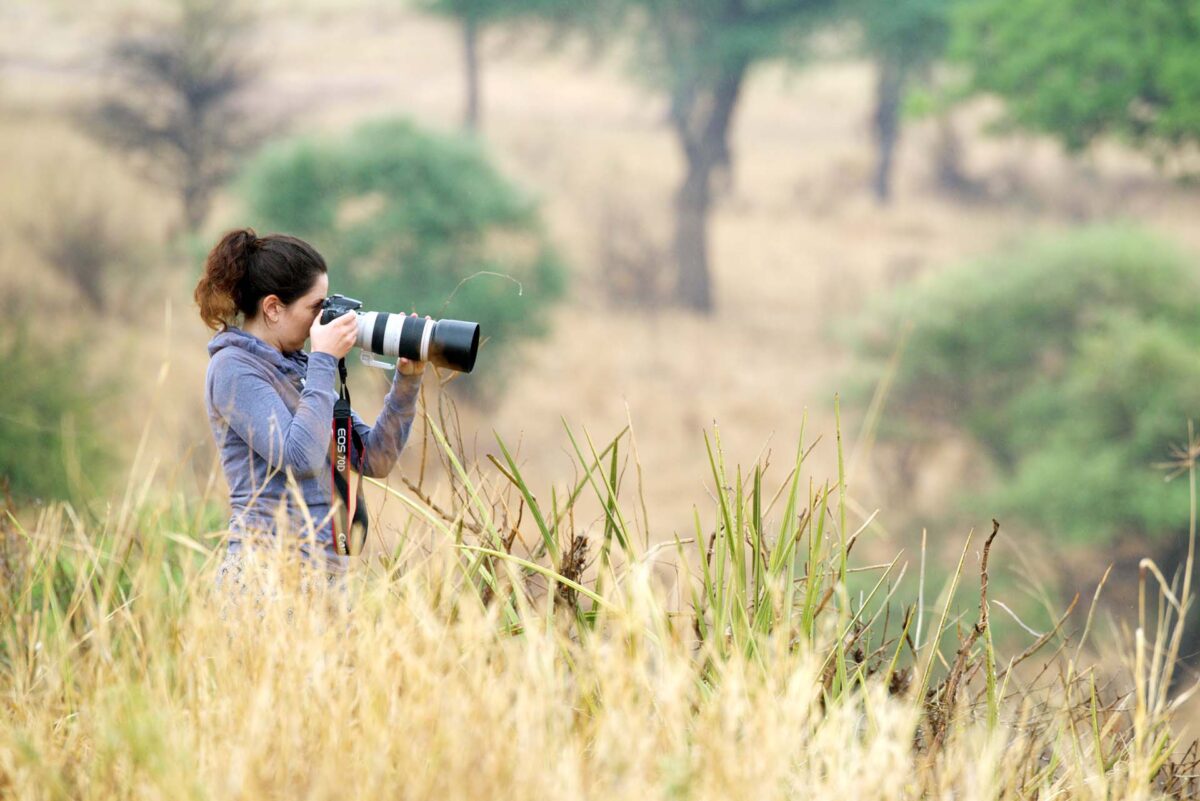
Medium telephoto lenses (85-200 mm)
I use these focal lengths for larger wildlife at medium distances, for atmospheric shots with surroundings and for safari situations where animals are often closer than you think. I love photographing deer at 135mm in the morning haze - close enough to show detail but wide enough to include the habitat.
The classic in this class is the 70–200 mm with a constant f/2.8 aperture. In day-to-day use, that constant value matters more than it looks on paper: exposure stays the same while zooming, you can keep shutter speeds short at lower ISO, and you don’t have to think about how much light you’re losing as you zoom. The trade-off: 200 mm is the end of the line—and that only works if the animals are either large or fairly relaxed.
Typical situations where I end up in this range: large animals at medium distance, shots where the surroundings matter, and anything shot from a vehicle.
Long telephoto lenses (200-400 mm)
This is the "sweet spot" for me. This is where I photograph deer, foxes, ibex, herons, sea eagles and much more. Versatile, suitable for touring, manageable.
Classics are zooms such as the 100-400 mm or 180-600 mm, but also fixed focal lengths such as the 300 mm PF. On safari in South Africa in Kruger National Park, I photographed almost everything with 80-400 mm - from elephants to lions, from lilac-breasted rollers to kudus.
From 300 mm onward you’re in the range where shy forest animals like deer, foxes, or badgers become frame-filling, and at f/4 wide open the background already melts away noticeably. At the same time, 300 mm prime lenses are light enough to carry on foot for hours. What many underestimate: some models focus from around 1.4 m, which is enough for larger insects or plant details—and makes these lenses more versatile in the field than the focal length suggests.
Super telephoto lenses (400 mm+)
Indispensable for birds and shy species. 500 mm is my standard; with the TC-14E, this becomes 700 mm for songbirds or particularly cautious species. Prime lenses deliver the highest quality, while zooms offer more flexibility. It should also not be underestimated that these lenses help to better isolate the subject, which helps avoid busy backgrounds.
Compared to a zoom, the difference is visible wide open: the bokeh circles of a fast super-tele prime are roughly twice as large as with a zoom at the same focal length, and with the narrow angle of view there’s less background in the frame anyway. Together, that makes it easier to keep the background calm.
The price you pay is weight. The fast models come in at 3 kg and up—and then everything depends on the tripod. If you don’t want to spend that much right away, start with a 180–600 mm or 200–500 mm; you get the flexibility, but the downside is the f/5.6 to f/6.3 aperture.
It is important to consider the gear and tripods—waiting in a blind with a 500 mm lens is exhausting, but often exactly what is needed to capture undisturbed moments.
Nikon telephoto zooms vs. fixed focal lengths
One of the central decisions in wildlife photography equipment is: do I rely on a flexible telephoto zoom or a highly specialized prime lens? Over the years, I have worked with both—from the 70–200 mm to the 500 mm f/4—and each solution has its pros and cons. Nikon offers a great selection for both types.
Why zooms are so popular in wildlife photography
Zooms give me the flexibility I need, especially when I'm out and about and don't know exactly what distance or which animals I'll encounter. A deer suddenly steps out of the forest? I zoom to 200 mm. A buzzard sitting far away on a post? I shoot up to 500 or 600 mm. Zooms are unbeatable at such moments.
F-mount classic:
- AF-S 70-200 mm f/2.8E FL ED VR
- AF-S 80-400 mm f/4.5-5.6G ED VR
- AF-S 200-500 mm f/5.6E ED VR
- AF-P 70-300 mm f/4.5-5.6E ED VR
Z-Mount innovations:
- NIKKOR Z 70-200 mm f/2.8 VR S
- Z 100-400 mm f/4.5-5.6 VR S
- Z 180-600 mm f/5.6-6.3 VR
Why I love fixed focal lengths
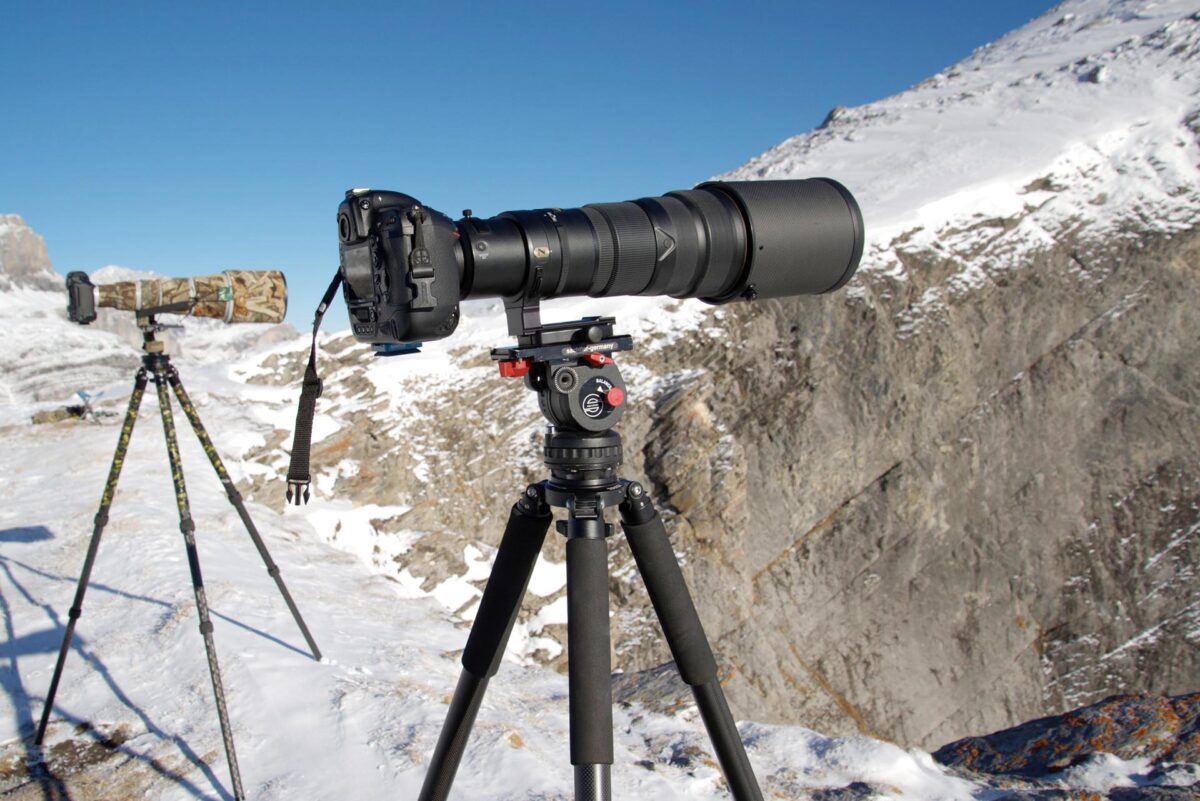
If I know what subject I'm aiming for - such as a sea eagle in flight, a deer in the morning mist or a bee-eater on a cliff face - then I go for a fixed focal length. They simply deliver the best image quality, the fastest autofocus and the highest light intensity.
F-mount legends:
- AF-S 300 mm f/2.8G VR II
- AF-S 300 mm f/4E PF VR
- AF-S 400 mm f/2.8E FL
- AF-S 500 mm f/4E FL
- AF-S 600 mm f/4E FL
- AF-S 800 mm f/5.6E FL
Z-Mount S-Line:
- Z 400 mm f/2.8 TC VR S
- Z 400 mm f/4.5 VR S
- Z 600 mm f/4 TC VR S
- Z 600 mm f/6.3 VR S
- Z 800 mm f/6.3 VR S
My conclusion
For me, zooms are the best choice for beginners and all-rounders: more flexible, cheaper, easier to handle. With a 200-500 mm or 180-600 mm you are equipped for almost all wildlife.
Fixed focal lengths are for ambitious photographers and professionals: ultimate image quality, best low-light performance, but heavier and more expensive. I mainly use them for specific projects when perfect sharpness and cropping are required.
Tip: If you want to directly compare the optical performance of Nikon lenses, DxOMark is an excellent resource. There you can objectively compare many Nikon telephoto lenses in terms of sharpness, bokeh, transmission and distortion. I myself regularly use the site to compare technical impressions with my practical experience.
The lightweight super-tele class: 400, 600, and 800 mm without f/4
Between the telephoto zoom and the pro primes at f/2.8 and f/4, a separate class has emerged in recent years: long primes that give up one stop of speed and, in return, weigh only half to a third as much. For anyone who’s on foot a lot, this is the most interesting development of the last few years—and older buying guides often don’t mention it at all.
NIKKOR Z 400 mm f/4.5 VR S – according to Nikon about 1,160 g without the tripod collar, minimum focus distance 2.5 m, 95 mm filter thread. With the Z TC-1.4x it becomes 560 mm, with the Z TC-2.0x 800 mm. This is the lens for anyone who finds a 180–600 too slow, and a 400 mm f/2.8 too heavy and too expensive.
NIKKOR Z 600 mm f/6.3 VR S – according to Nikon about 1,470 g including the tripod collar, minimum focus distance 4 m, 95 mm filter thread. This is made possible by a PF element (Phase Fresnel), which greatly shortens the design. A 600 that you can carry on a strap all day didn’t exist before.
NIKKOR Z 800 mm f/6.3 VR S – according to Nikon about 2,385 g, minimum focus distance 5 m, filter at the rear in a 46 mm drop-in slot. Also with a PF element. With the Z TC-1.4x it’s 1,120 mm, with the Z TC-2.0x 1,600 mm—though Nikon also notes that autofocus performance drops depending on subject and light.
You pay for it in aperture. f/6.3 at 600 or 800 mm means ISO values in the woods and at dusk that you wouldn’t have touched ten years ago. In open terrain and sun it barely matters; in dense forest it does. If you often work in low light, you’re better off with a used f/4 prime—even if it’s twice as heavy.
Nikon teleconverters: The TC series
A teleconverter (TC) extends the focal length of your lens by placing it between the camera and the lens. For me, they are an important tool when I simply need more reach for shy animals or birds without having to invest in an expensive super telephoto fixed focal length.
The image quality decreases (of course, there are more lenses between the subject and the sensor), the autofocus becomes slower (the sensor then also receives less light), but the subject size increases. Teleconverters help immensely with the old saying "If you can't photograph it well, at least make it big".
Available teleconverters
F-mount teleconverter:
- TC-14E III (1.4×)
- TC-17E II (1.7×)
- TC-20E III (2.0×)
Z-mount teleconverter:
- Z TC-1.4×
- Z TC-2.0×
Integrated teleconverter:
- Z 400 mm f/2.8 TC VR S (560 mm f/4)
- Z 600 mm f/4 TC VR S (840 mm f/5.6)
Compatibility
F-mount: 1.4× works with almost all large AF-S fixed focal lengths. 200-500 mm not officially compatible, but works to a limited extent.
Z mount: compatible with 70–200/2.8, 100–400, 400/2.8 TC, 400/4.5, 600/4 TC, 800/6.3. Not with the Z 180–600 mm.
Practical examples
- 300 mm f/2.8 + 1.4× = 420 mm f/4 - excellent for birds of prey
- 500 mm f/4 + 2.0× = 1000 mm f/8 - extreme, only in the best light
- Z 400 mm f/4.5 + Z 1.4× = 560 mm f/6.3 – lightweight combo for long hikes
- Z 600 mm f/4 + integrated TC = 840 mm f/5.6 - my dream setup for birds
- Z 100-400 mm + Z 1.4× = 140-560 mm f/6.3-8 - solid entry-level combination
Conclusion: 1.4× converters can almost always be used, 2.0× is only recommended with absolute top fixed focal lengths, integrated converters are unbeatable in practice.
Lens recommendations by category
Nikon’s telephoto lineup is huge—from affordable entry-level zooms to high-end primes. What you’ll find here is a recommendation, not an inventory list; my own two long teles are listed above.
Entry-level telephoto lenses
- NIKKOR Z 180-600 mm f/5.6-6.3 VR
- AF-S 200-500 mm f/5.6E ED VR
- NIKKOR Z 100-400 mm f/4.5-5.6 VR S
Mid-range telephoto lenses
- NIKKOR Z 400 mm f/4.5 VR S
- NIKKOR Z 600 mm f/6.3 VR S
- AF-S 300 mm f/4E PF ED VR
- NIKKOR Z 100-400 mm f/4.5-5.6 VR S
Professional telephoto lenses
- NIKKOR Z 400 mm f/2.8 TC VR S
- NIKKOR Z 600 mm f/4 TC VR S
- NIKKOR Z 800 mm f/6.3 VR S
Of course, depending on your budget, these models can also be exchanged for older F-mount models. Basically, you should carefully consider whether the money is not better invested in a used, high-performance fixed focal length than in a new telephoto zoom of the latest generation.
I've always photographed with used older models, and I wouldn't say that I've ever failed to take a picture because of the older lens.
Practical tips for various wildlife areas
Bird photography
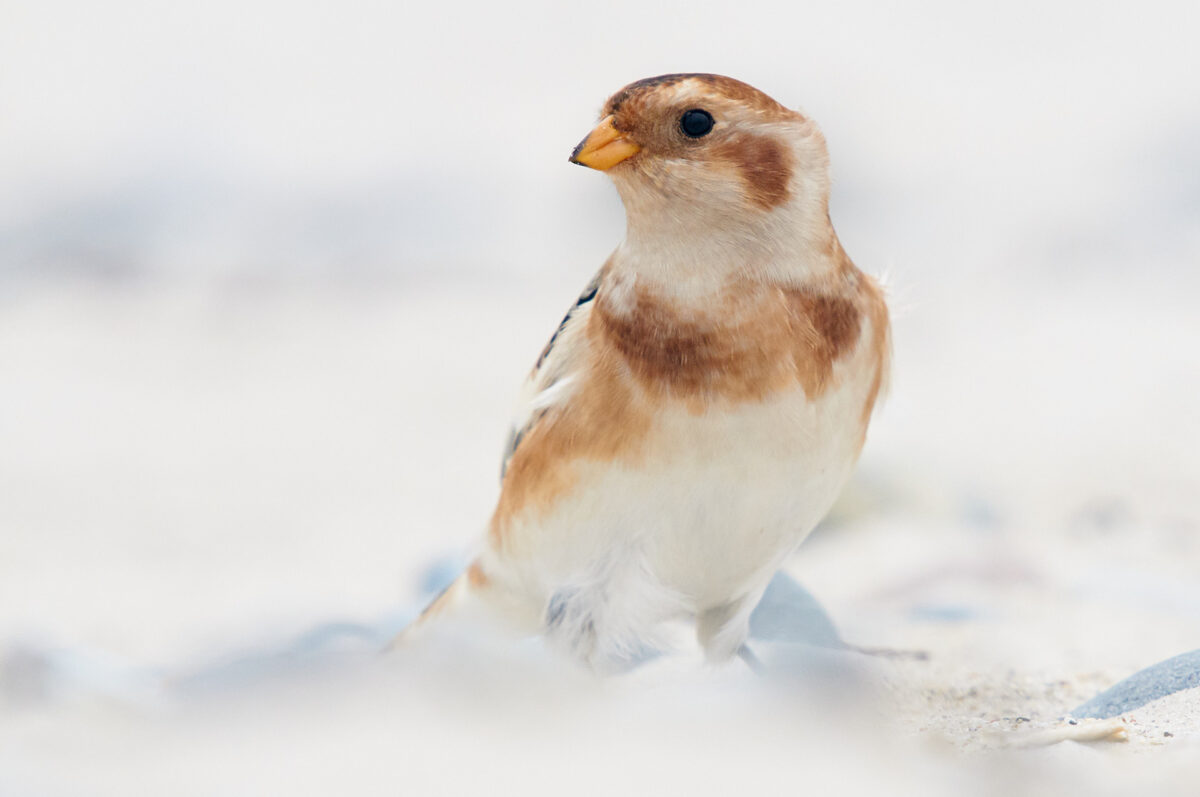
Birds are small, fast and usually shy. For songbirds you need a lot of focal length, for birds of prey in flight you need above all autofocus performance. From 400 mm upwards is mandatory, for songbirds usually 600-800 mm. Flight shots are successful with AF-C and 1/2000 s or faster, for perched birds patience and camouflage are crucial.
Recommendations: Z 180–600 mm (entry level), Z 600 mm f/6.3 or 300 mm PF + TC-14E (mid-range), Z 600 mm f/4 TC (pro).
Large animal photography
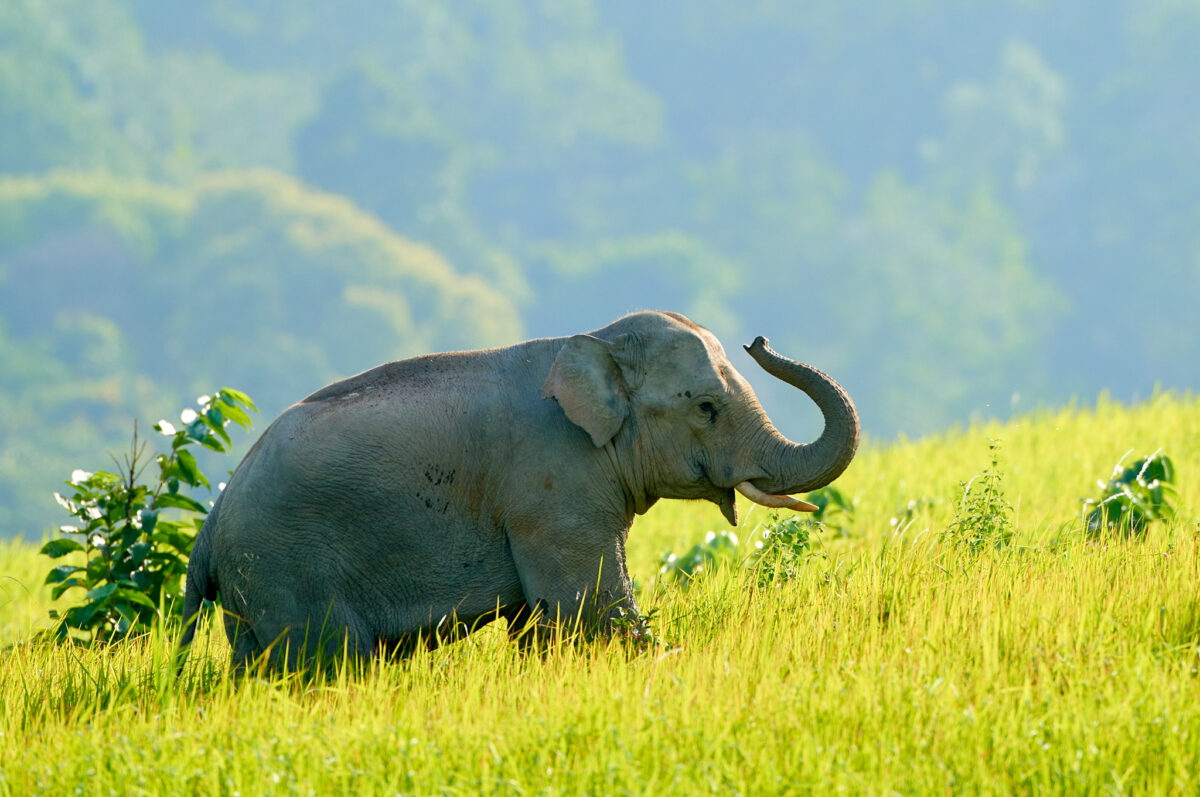
Elephants, bison or deer - large animals often require less focal length, but robustness and speed. On safari, I prefer to use the combination of 70-200 mm + 180-600 mm. Domestic ungulates often work perfectly with 200-400 mm (especially where they are not so heavily hunted).
Recommendations: AF-S 200–500 mm (entry level), Z 100–400 mm or Z 400 mm f/4.5 (mid-range), Z 400 mm f/2.8 TC (pro).
Shy forest animals
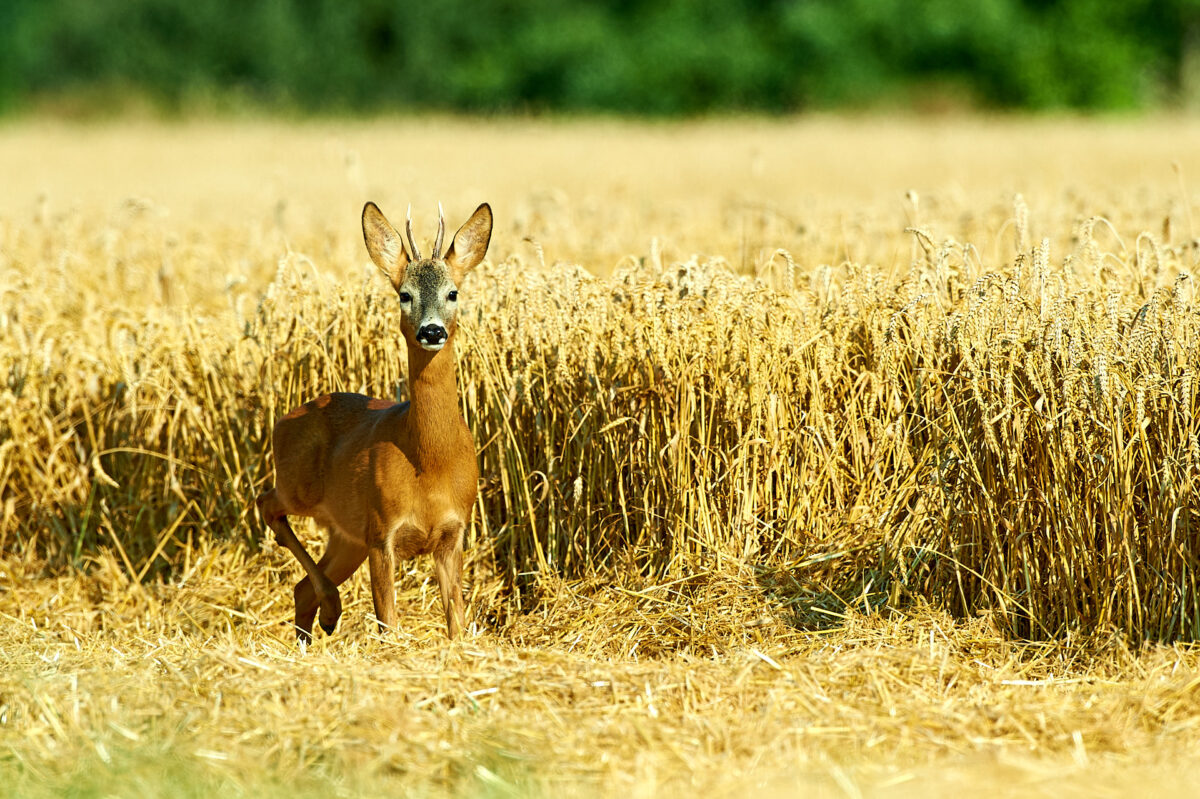
Deer, foxes, and badgers are cautious and often out in low light. Reach, speed, and a steady hand are crucial. For longer treks, I take the 180–600 mm; in a blind, the 500 mm stays on the tripod.
Recommendations: Z 180–600 mm (entry level), 300 mm PF (mid-range), Z 600 mm f/4 TC (pro). Here, aperture matters more than elsewhere, so in this range I’d rather recommend a used f/4 prime than one of the new f/6.3 models.
Technical considerations and practical tips
Tripods and stabilization
For super-telephoto lenses from 500 mm up, a monopod or gimbal is almost always necessary. A tripod with a gimbal in the blind, a monopod on safari. Handheld shooting works with the 180–600 mm if there is enough light. You can find a short guide to the right tripods here.
Autofocus
AF-C is a must. Animal/eye detection on the Z9/Z8 is impressive, but I prefer to use small fields when the background is unstable. Back-button focus is one of my most important techniques. The autofocus is only triggered when I press the AF-ON button, but not when I press the shutter release. This allows me to decide for myself when and for how long the camera focuses.
Avoid common mistakes
- Overestimate manual handling: A 600 or 500 cannot be held in the hand for long
- Disregard light intensity: f/6.3 is sufficient in the sun, f/4 is worth its weight in gold in the forest or at dusk
- Overestimate teleconverters: 2.0× is rarely useful
- Underestimate weight: It's better to use a lighter tele, but use it regularly
- Not practicing enough: train your technique beforehand
- Ignore the behavior of the animals: Distance and respect are more important than any focal length
Buying advice: making the right choice
Zoom or fixed focal length? Zooms are flexible, cheaper and lighter, while fixed focal lengths deliver maximum quality and light intensity.
New or used? New = warranty and state-of-the-art technology, used = much cheaper, especially in F-mount.
Rent before you buy: A weekend of testing often saves expensive bad purchases.
Frequently asked questions about telephoto lenses for wildlife photography
What focal length do I need for wildlife photography?
As a lower limit, 200 mm; it really starts to make sense from 300 mm. For deer, foxes, and similarly cautious animals, the usable range is 300 to 500 mm; for songbirds, more like 600 to 800 mm. Large animals on safari often work with 200 to 400 mm.
Is a 180–600 mm enough for wildlife photography?
For getting started, yes—and I regularly take it myself when the hike is long. The limit is aperture: at f/6.3 it gets tight in the woods and at dusk, and it won’t take a teleconverter.
When is a prime worth it over a telephoto zoom?
When you know what you want to photograph—and when you often work in low light. An f/4 prime gives you a good 1.5 stops over f/6.3, plus the calmer background and usually faster autofocus. If you never know what you’ll run into, the zoom is the better tool.
How much image quality does a teleconverter cost?
A 1.4× converter costs you one stop of light and a bit of sharpness—barely noticeable on a good prime. A 2.0× costs two stops, and autofocus becomes noticeably slower. That’s why I only use the 2.0× in very good light.
Do I absolutely need a tripod from 500 mm onward?
Handheld works briefly, but not for long. The fast 500s and 600s weigh 3 kg and more, and if you’re sitting in a hide or waiting for an animal, you need a tripod and gimbal. The new lightweight f/6.3 models, on the other hand, can be carried over long distances and used handheld.
Conclusion
Telephoto lenses are the key to wildlife photography. Nikon offers the right tool for every project, from the fairly priced 180-600 mm to the fast 400/2.8 and 600/4.
My recommendation for beginners: the NIKKOR Z 180-600 mm f/5.6-6.3 VR.
For the next step: depending on your focus, the Z 400 mm f/4.5 or Z 600 mm f/6.3 if weight and price matter—or the Z 400 mm f/2.8 TC or Z 600 mm f/4 TC if aperture is the priority. Used F-mount equivalents work just as well.
In the end, it's not just the technique that counts. Patience, observation skills and respect for the animals are at least as important as the choice of lens. With the right Nikon equipment and the right approach, you can take pictures that show wild animals in all their beauty.