
Covered in snow, the Bavarian Forest National Park is transformed into a magical open-air photo studio in winter. I find that the cold season in particular offers unique opportunities for extraordinary wildlife shots.
However, the combination of glistening snow in the Bavarian Forest and exciting wildlife presents us photographers with special challenges. Perfect shots in the winter forest require not only the right equipment, but also special techniques and timing.
In this article, I share my most important tips that I have collected over the years in the animal enclosure.
Inhalt
- Equipment for the winter
- The best photo spots in the animal enclosure
- Optimal times of day and lighting conditions
- Camera settings for winter photos
- Understanding animal behavior
- Summary
Equipment for the winter
Winter photography places special demands on our equipment. From my experience, I know that the right preparation is crucial to the success of a photo session.
Winterizing camera equipment
The biggest challenge for our camera equipment is the extreme temperature fluctuations. I place my camera in a protected, cool place about an hour before the shoot so that the technology can get used to the low temperatures. When not in use, I protect the camera under my jacket - a simple but effective trick.
The batteries deserve special attention, as they lose power much more quickly in the cold. I always carry spare batteries close to my body and only change them when absolutely necessary. A small plastic box with polystyrene also works well here.
Important additional equipment for photographers
For successful winter photography in the Bavarian Forest I need some special equipment:
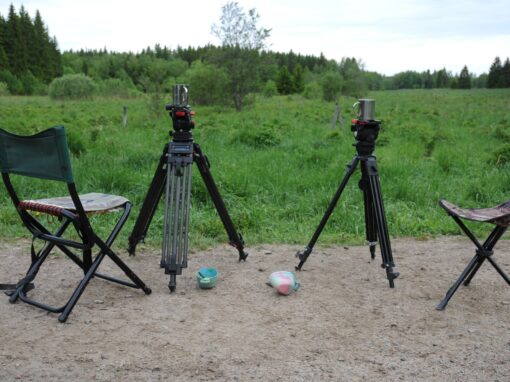
- A stable tripod for long exposure times
- Clean plastic bags for transporting the camera
- Absorbent cleaning cloths
- Dry granules (silica) in the camera bag
An important tip from my experience: Never breathe on the lens or the camera in sub-zero temperatures, as this can lead to icing. I also avoid changing lenses in winter as far as possible.
Personal equipment against the cold
The right clothing is just as important in the draughty animal enclosure as the technical equipment. I rely on the tried and tested onion principle with several airy layers of insulation. Special photographer's gloves are particularly important to me, as they both keep you warm and provide sufficient sensitivity for operating the camera.
For longer photo sessions in the winter forest, I always pack a thermos flask with a hot drink. A warmed cherry stone cushion in the photo bag also helps to keep the equipment at a material-friendly temperature.
After the shoot, the correct treatment of the equipment is crucial. I let the camera acclimatize in the car or garage before I bring it into the warmth. This prevents condensation from forming, which could damage the sensitive technology.
The best photo spots in the animal enclosure
More than 40 native animal species can be photographed in the two animal enclosures - it's a real playground!
Optimal locations for wolf photos
I find that the Falkenstein National Park enclosure offers the best opportunities for photographing wolves. The wolves here are usually lethargic during the day, which is why I take photos particularly early in the morning or at dusk. The elevated observation points offer me the best perspectives for natural-looking shots. Caution is advised when photographing from the bridge: it sways quite a bit and with critical exposure times under 1/40s this can be a real problem.
Perfect positions for lynx photography
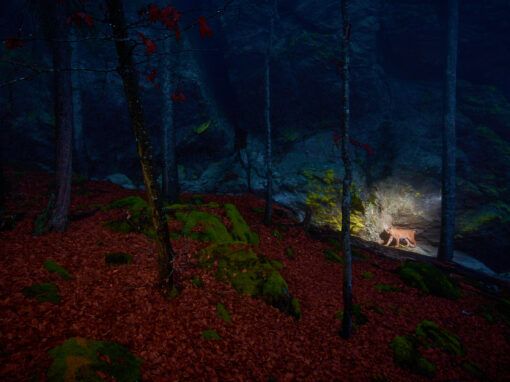
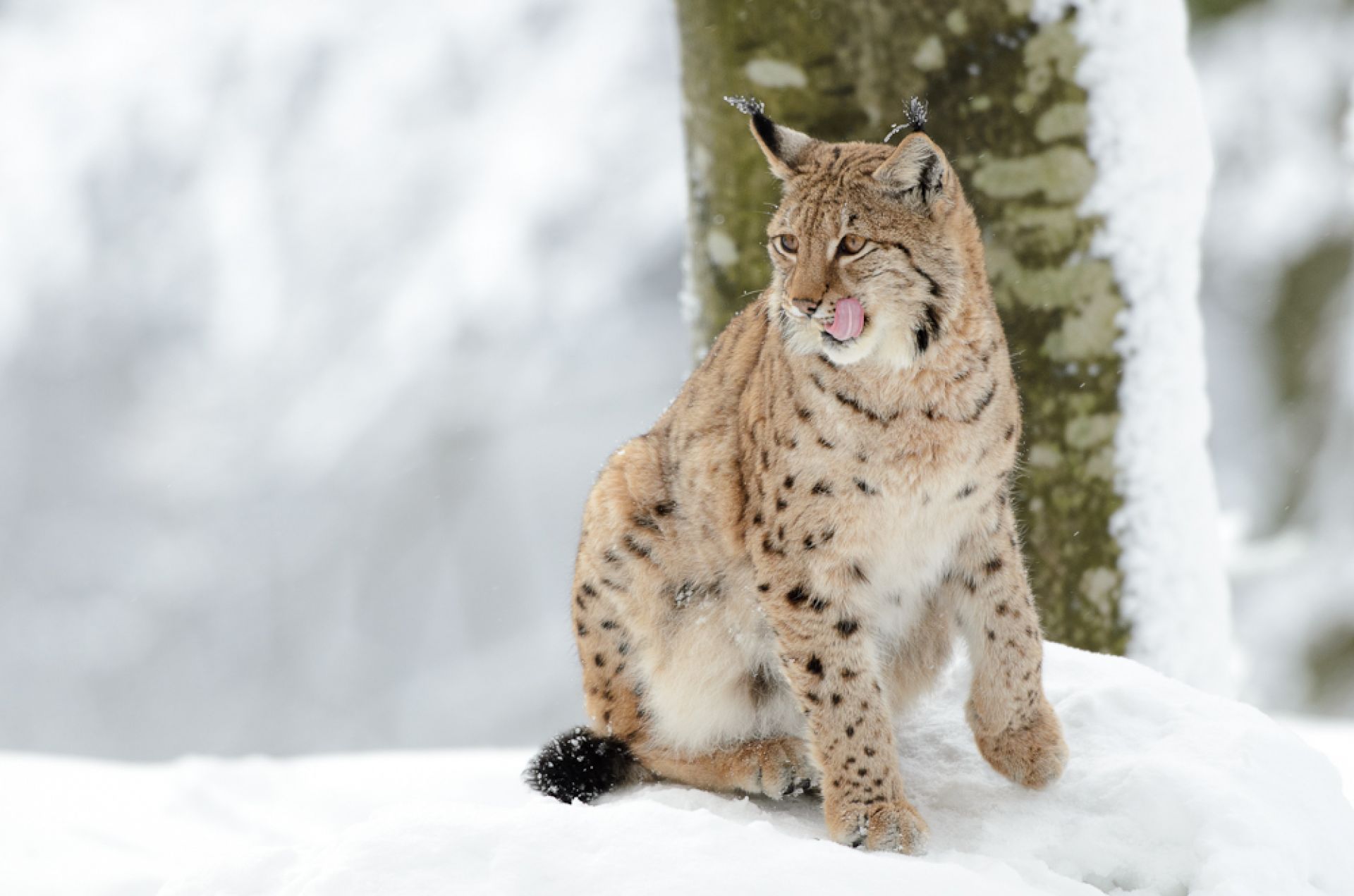
For lynx photos, I use both the Lusen animal enclosure and the Falkenstein National Park enclosure. Both enclosures have their advantages - the Lusen animal enclosure is better suited for shots with a landscape around it, while you often get really good close-ups in Ludwigsthal (Falkenstein). The same applies here: the animals are most active in the morning and evening.
Other worthwhile photo spots
In the Lusen animal enclosure, there are numerous exciting photo opportunities along the 7-kilometer circular trail:
- The walk-in aviaries are ideal for close-up shots of ruffed grouse - especially attractive in winter
- The wild boar enclosure is perfect for high-contrast black and white shots in the snow
- The wild cat enclosure is always worth a visit, especially when it has snowed.
An important tip from my experience: During feeding times, the animals stay in one place for longer, but you can clearly see the enclosure situation in the pictures because the snow is quickly trampled underfoot. I therefore prefer the times between feedings for my photos, when the animals are showing their natural behavior.
Optimal times of day and lighting conditions
The perfect lighting mood is the key to exceptional winter shots in the animal enclosure.
Use the golden and blue hour
The golden hour directly after sunrise and before sunset offers me the softest and warmest light for photographing animals. I particularly like to use this time for portraits of wolves and lynx, as the soft light casts fewer harsh shadows and the snow reflects the light beautifully. However, light cover is best, as the thin cloud cover softens the dark shadows.
The blue hour - about 30 minutes after sunset - conjures up a mystical atmosphere in the winter forest. This is when I take my most atmospheric shots, especially when there is still some residual light in combination with the snow to create magical moments. However, you have to be prepared for long exposure times - but it can really be worth it.
Mastering midday and afternoon light
Midday light presents us photographers with special challenges. However, I use the harsh contrasts specifically for:
- Close-ups of structures in the snow
- Dynamic action shots of the animals (when they are active)
- High-contrast black and white images
When exposing in bright midday light, I recommend a slight overexposure, otherwise the snow can appear too gray and dull. I then often work with a polarizing filter to control reflections.
And otherwise, midday sun is always good for a snack with hot tea.
Weather-dependent scheduling
The winter months offer unique lighting conditions that I take advantage of. Overcast skies create soft, even lighting conditions - ideal for expressive animal portraits.
In the Bavarian Forest, I learned that there is no such thing as bad weather when it comes to winter photography. Magical moments are often created even when it's snowing. The low winter sun creates a softer light than in summer, and the snow reflects this light in a special way.
For the best results, I always plan my photo sessions in the animal enclosure depending on the weather. The weather forecast helps me to choose the right equipment and find the best time for my shots. In heavy snowfall, I use the diffuse lighting conditions to create atmospheric winter impressions.
Camera settings for winter photos
The right camera setting makes all the difference when it comes to winter photography in the animal enclosure.
Exposure in the snow
In the snow, my camera's exposure metering is regularly misled. I find that an overexposure of +0.7 to +1.5 EV is usually necessary for the snow to appear really white and not gray. For particularly high-contrast scenes, I create an exposure series with +2.0 EV to be on the safe side.
Autofocus strategies in snowfall
Autofocus faces particular challenges in snowfall. The falling flakes often confuse the AF system, which is why I switch to manual focus in such situations. For creative effects, I like to experiment with different shutter speeds - at around 1/30 of a second, the snowflakes leave interesting trails.
When photographing animals in the winter forest, I use continuous autofocus with a small focus field. This helps me to focus specifically on the animals and not on the snow in the foreground.
Image composition in winter
The wintry landscape in the animal enclosure of the Bavarian Forest National Park offers unique opportunities for minimalist compositions. The snow simplifies the composition as it hides many distracting details. I pay particular attention to that:
- the main motifs stand out from the white background
- sufficient “pattern” is retained in the snow
- the viewing direction of the animals has space in the picture
In post-processing, I work in RAW format, which gives me more leeway when adjusting the exposure and white balance. The automatic white balance tends to produce a blue cast in snow, which I correct manually.
For particularly expressive shots, I use the natural frames that the snow-covered forest offers me. I use deep snowdrifts or snow-covered branches as foregrounds. This creates images with a greater sense of depth that perfectly capture the winter atmosphere in the animal enclosure.
Understanding animal behavior
The key to animal photography is always to understand the behavior of the animals. Especially in the snow-covered animal enclosure, the inhabitants show fascinating behavioral patterns.
Activity patterns in winter
In winter, I observe how the animals adapt their activities to the cold season. The lynx are mainly active at dusk, while during the day they seek out sheltered resting places in caves or dead wood.
The winter behavior of the animals in the animal enclosure is diverse:
- Wolves move through the snow in single file to save energy
- Lynx use their broad paws like snowshoes
- Ruffed grouse burrow under the snow so that often only their heads peek out
Use feeding times
I have found that feeding times offer special photo opportunities. However, I would advise you to be there at least one hour before feeding time to find the best position. You should also be patient and wait after feeding to see if anything else happens.
Patience, patience, patience
Even in winter, when it comes to animal photography, it pays to sit still. Although the animals live in enclosures, it is often very difficult to see or even photograph them. “Normal” visitors often even doubt that animals live there at all.
Summary
My years of experience with winter photography in the Bavarian Forest National Park
Winter transforms the animal enclosure into a magical photo location that inspires us photographers anew with every visit. With the right preparations and a little patience, you too can create impressive winter shots that perfectly capture the natural beauty of the animals in their snowy surroundings.